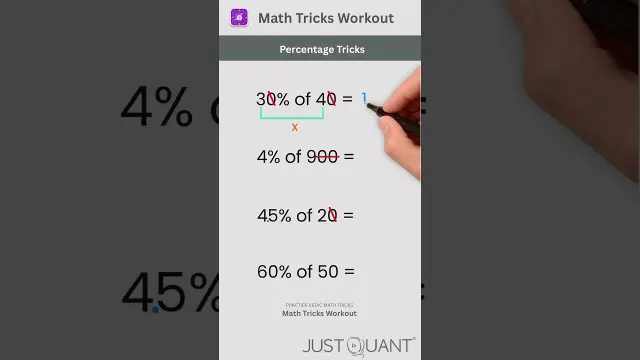
 Instant Percentage Calculation Tricks and Shortcuts
#Math Shortcuts
9 ideas
Instant Percentage Calculation Tricks and Shortcuts
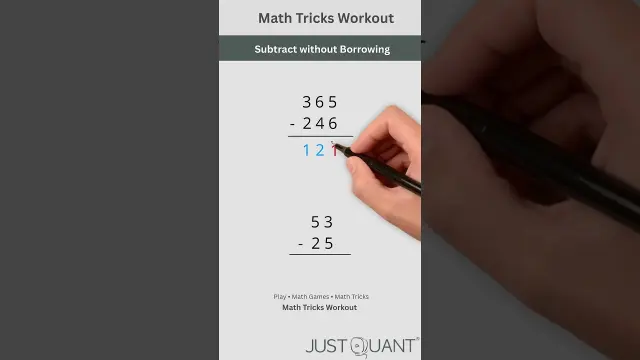 Subtraction Shortcut to Subtract Without Borrowing
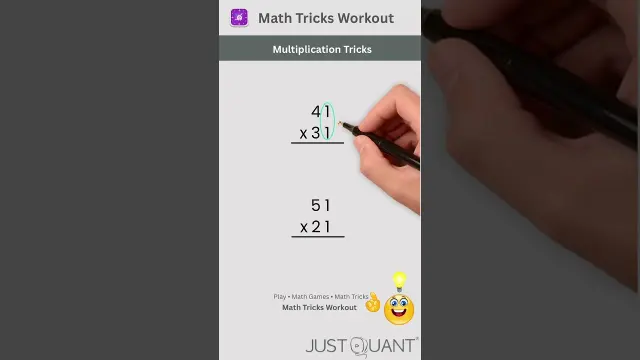 Multiplication Trick for Numbers Ending in One
 Instant Multiplication Trick for Multiples of Eleven
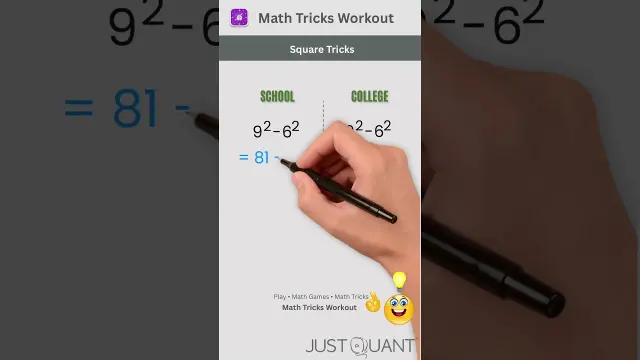 Difference of Squares Shortcut Using Vedic Math
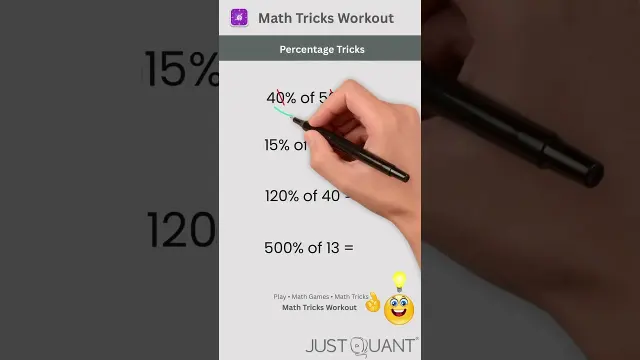 Zero-Canceling Percentage Trick for Mental Math
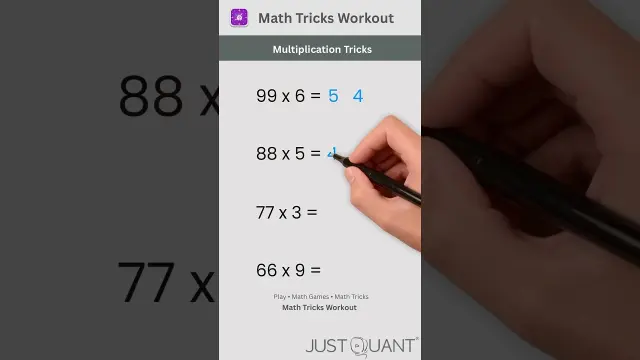
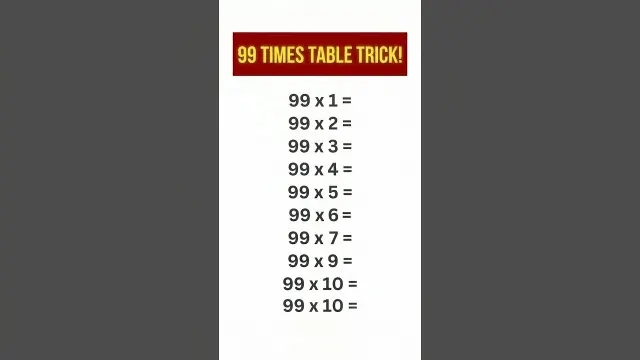 Easy Shortcut for the 99 Times Table in Mental Math
 Unique Tips and Shortcuts for Fast Mental Math
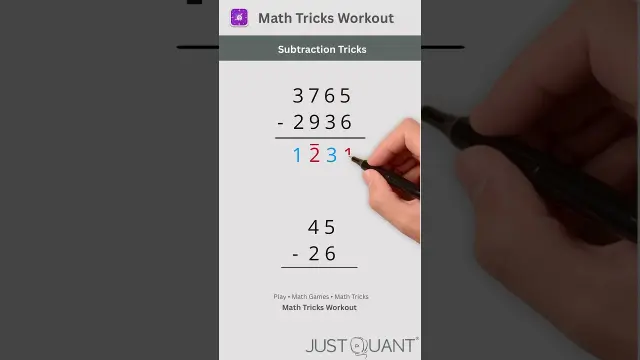 Left to Right Subtraction Mental Math Trick
Get new #Math Shortcuts ideas by email
Every Thursday: the week's best ideas, with the newest from #Math Shortcuts.
Related tags
Math Shortcuts for Faster Mental Calculation
Math shortcuts are simple methods that help you calculate faster without writing every step. They are useful in everyday life, from shopping and budgeting to checking bills, splitting costs, or solving schoolwork more quickly. In essence, a shortcut is just a more efficient way to reach the same answer.
Most math shortcuts grow out of number patterns, place value, and basic properties of arithmetic. Many have long roots in traditional calculation methods used by merchants, teachers, and mathematicians. Others are simply natural ways to make use of how numbers behave. They are not magic tricks; they work because the underlying math is still the same.
Common kinds of math shortcuts
Some shortcuts are designed for mental multiplication. For example, numbers near 10, 100, or 1,000 are often easier to work with if you think in terms of what they are close to. This can make percentage calculations, multiplication by 11, or multiplying by 9 much quicker.
Read more
Other shortcuts help with subtraction. Instead of starting on the left, some people prefer to subtract from left to right, which can make a calculation easier to hold in memory. You can also sometimes rewrite a problem to avoid borrowing or to use round numbers first.
A third group involves estimation and decomposition. This means breaking a number into parts that are easier to handle. For example, you might split 47 into 40 and 7, or turn 25% into one quarter. This style is especially helpful when you want a fast answer that is close enough, or when you want to check whether a result is reasonable.
What to know before you start
A shortcut is only useful if you understand the basic arithmetic behind it. If you learn a trick without knowing why it works, it can be hard to remember or use correctly. Try to understand the pattern, not just the steps.
It also helps to know that not every shortcut is best for every problem. Some are excellent for mental math but less practical for long, written calculations. Others are great for exact answers only in certain cases. The best approach is to build a small toolkit and choose the method that fits the numbers in front of you.
Practical tips for using shortcuts well
- Start with small, familiar numbers until the pattern feels natural.
- Check your answer with rough estimation to catch mistakes.
- Use round numbers and place value to simplify calculations.
- Practise a few methods regularly rather than many methods once.
- If a shortcut feels confusing, fall back to the standard method and compare the two.
A simple way to think about them
The real value of math shortcuts is not speed alone. They also help you see numbers more clearly, notice patterns, and gain confidence with mental calculation. As you practise, you may find that many “hard” problems become a series of small, manageable steps. Over time, that can make math feel less stressful and more intuitive.
Videos come from YouTube and posts from Instagram; titles and summaries are our own. All rights belong to their creators.