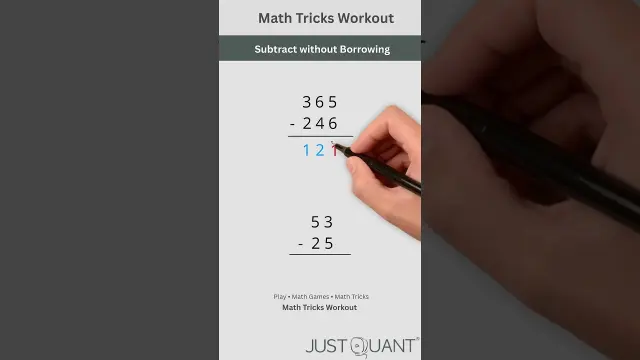
 Subtraction Shortcut to Subtract Without Borrowing
#Subtraction
5 ideas
Subtraction Shortcut to Subtract Without Borrowing
 Practice iReady Math for First Grade with Fun Activities
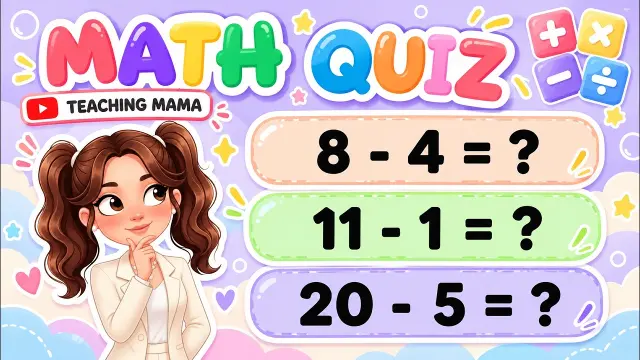 Fun Basic Subtraction Math Quiz Activity for Young Children
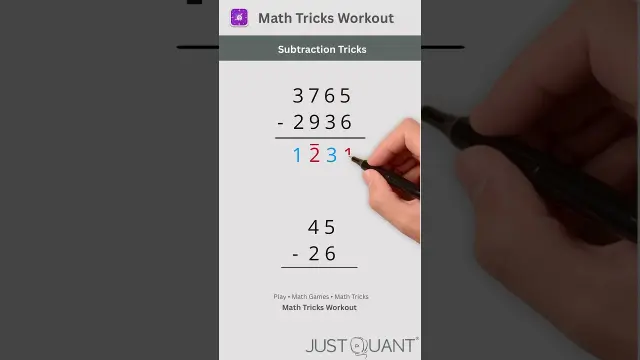 Left to Right Subtraction Mental Math Trick
 My First Math Adventure 1998 PC Game Playthrough
Get new #Subtraction ideas by email
Every Thursday: the week's best ideas, with the newest from #Subtraction.
Related tags
Subtraction: Understanding Taking Away
What subtraction is
Subtraction is one of the four basic operations in mathematics. It tells you how much is left when you take one amount away from another, or how much difference there is between two amounts. If you have 8 apples and give away 3, subtraction shows that 5 remain.
Subtraction is used in many everyday situations: counting money, measuring ingredients, tracking time, comparing amounts, and solving word problems. It is also an important building block for more advanced math.
The parts of a subtraction problem
Read more
A subtraction sentence usually has three main parts:
- The starting number, called the minuend
- The number being taken away, called the subtrahend
- The answer, called the difference
For example, in 9 - 4 = 5, 9 is the starting number, 4 is what you subtract, and 5 is the difference.
You may also see subtraction written with words such as "take away," "minus," or "less than," depending on the context.
Ways to think about subtraction
There are several useful ways to understand subtraction:
- Taking away: removing objects from a group
- Comparing: finding the difference between two amounts
- Counting back: starting with one number and moving backward
- Missing addend: asking what number must be added to make the total
These different meanings all describe the same basic idea, but one may feel easier than another depending on the problem.
Basic methods
For simple subtraction, you can often count backward or use objects and drawings. As numbers get larger, written methods become more helpful. When the digits in the top number are smaller than the digits below them, you may need to regroup, sometimes called borrowing. This lets you subtract in columns from right to left.
A few helpful habits make subtraction easier:
- Write numbers neatly in columns
- Subtract ones before tens, then hundreds
- Check each step carefully
- Use estimation to see whether your answer makes sense
Subtraction with decimals and fractions
Subtraction also works with decimals and fractions. The same idea applies: you are finding what remains or what is left over. With decimals, line up the decimal points carefully. With fractions, make sure the parts have the same denominator before subtracting.
What beginners should remember
If you are just learning subtraction, focus first on understanding the idea rather than memorizing steps. It often helps to use everyday objects, number lines, or small sketches. Try to see subtraction as a story about change, comparison, or missing amounts.
A few practical tips:
- Start with small numbers
- Use real objects when needed
- Practice mental subtraction for easy facts
- Check answers by adding the difference back to the smaller part
- Read word problems slowly and identify what is being taken away or compared
Subtraction becomes easier with practice. Once you understand the meaning behind it, you can use it confidently in schoolwork and in daily life.
Videos come from YouTube and posts from Instagram; titles and summaries are our own. All rights belong to their creators.