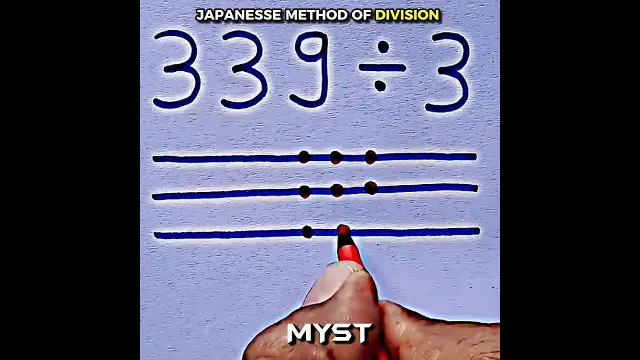
 Visual Japanese Line Method for Fast Division
#Math
11 ideas
Visual Japanese Line Method for Fast Division
 Journey Through Mathematical Concepts to Euler's Identity
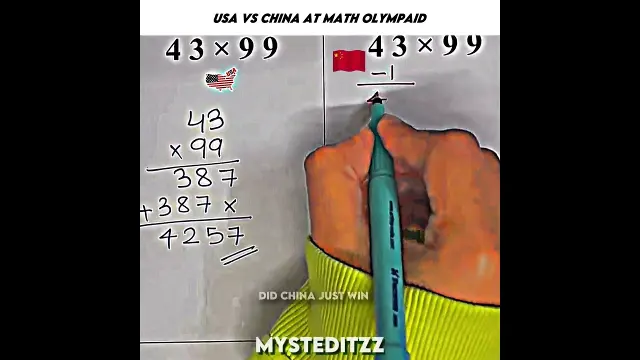 Math Olympiad Shortcut for Multiplying by Ninety Nine
 Comprehensive Geometry One Shot Marathon for Exam Preparation
 Easy Methods for Breaking Down Division Problems
 The Mathematical Paradox of Calculating Family Ancestors
 Geometry Practice Questions and Problem Solving Marathon
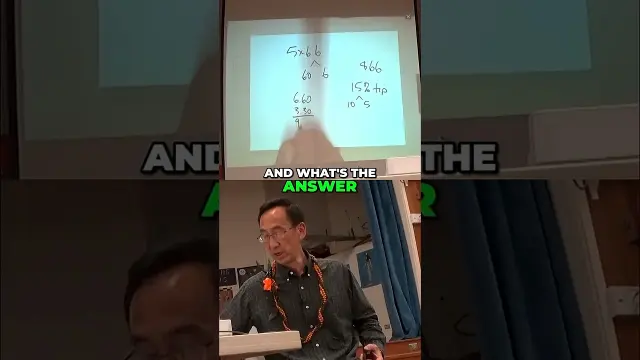 Simple Mental Math Trick for Calculating Tips Quickly
 Mathematical Reason Why Music Has Twelve Notes
 Hearing The Sound Of Everyday Object Equations
 Understanding Geometry Basics Explained Simply for Everyone
Get new #Math ideas by email
Every Thursday: the week's best ideas, with the newest from #Math.
Related tags
Math: Basics, Branches, and Everyday Use
What mathematics is
Mathematics is the study of numbers, shapes, patterns, quantities, and logical relationships. It helps you describe the world in a precise way, whether you are counting, measuring, comparing, or reasoning through a problem. At its heart, math is both a practical tool and a way of thinking.
People use mathematics in daily life, from budgeting and cooking to building, designing, and planning. It also plays a central role in science, technology, and many kinds of skilled work. Even when the calculations are simple, math helps you make sense of information and choose carefully.
Main branches of math
Read more
Mathematics includes several areas, each with its own purpose.
- Arithmetic deals with basic operations such as addition, subtraction, multiplication, and division.
- Algebra uses symbols and rules to express relationships and solve for unknown values.
- Geometry focuses on shapes, space, angles, length, area, and volume.
- Trigonometry studies the relationships between angles and sides in triangles.
- Statistics helps you collect, organize, and interpret data.
- Probability looks at chance and the likelihood of different outcomes.
These branches often overlap. A single problem may involve more than one kind of math, especially in schoolwork, engineering, or data analysis.
How math is used
Math is useful anywhere you need accuracy, structure, or comparison. You use it when estimating time, splitting expenses, following measurements, or checking whether something makes sense. It is also important in more specialized fields such as architecture, finance, medicine, and computer science.
In creative work, mathematics can appear in patterns, proportions, symmetry, and visual balance. In practical tasks, it helps with planning and problem solving. In academic settings, it trains you to work carefully, follow steps, and justify your answers.
How to build confidence with math
If you are learning math, it often helps to start with the basics and move step by step. Understanding one idea well is usually more valuable than rushing ahead.
- Learn the meaning of each step, not just the answer.
- Practice regularly in short sessions.
- Write out your work clearly so you can check it.
- Use simple examples before trying harder problems.
- Review mistakes and notice where confusion starts.
- Ask yourself what the question is really asking.
It is normal to find some parts of math easier than others. Progress usually comes from repetition, patience, and clear thinking rather than speed.
Practical tips for beginners
When you work on math problems, read carefully and identify the known information first. If the problem feels difficult, try drawing a sketch, making a list, or breaking it into smaller parts. For geometry, a diagram can make the relationships much easier to see. For algebra, keeping symbols organized helps avoid small errors.
Most of all, try to stay calm. Math becomes much more manageable when you treat it as a process of understanding, checking, and improving.
Videos come from YouTube and posts from Instagram; titles and summaries are our own. All rights belong to their creators.