 The Engineering Behind Mile-High Skyscrapers
#Skyscraper
14 ideas
The Engineering Behind Mile-High Skyscrapers
 The Deconstruction and Rise of London New Supertall Tower
 Why Pakistan Abandoned Its Tallest Skyscraper Project
 The Story of China Unfinished Giant Skyscraper
 Investigating New York Next Supertall Skyscraper Boom
 The History and Challenges of Dallas Tallest Residential Tower
 The Physics and Limits of Building Very Tall Skyscrapers
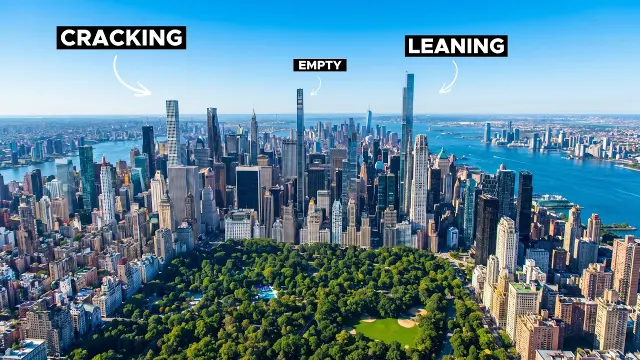 Five Broken New York Skyscrapers and Their Future
 The Luxury Redevelopment Skyscraper Dividing Europe
 Building a Massive LEGO Skyscraper City
 What Happens When You Build a Skyscraper
 Building a Detailed Skyscraper Model with LEGO Bricks
 The Record-Breaking Height of the Monadnock Building
 The Neo-Futurist Design of Vancouver House
Get new #Skyscraper ideas by email
Every Thursday: the week's best ideas, with the newest from #Skyscraper.
Related tags
Skyscrapers: Tall Buildings and Their Design
Skyscrapers are very tall buildings designed to make efficient use of limited urban land. They are usually found in dense cities, where space is valuable and many people, offices, or services need to fit into a small footprint. Because of their height, skyscrapers are as much feats of engineering as they are works of architecture.
The idea of building upward became practical when new structural methods, safe passenger elevators, and stronger materials made tall buildings usable and accessible. Early skyscrapers helped shape modern city skylines, and since then they have become symbols of growth, ambition, and urban identity. Today, they can serve many purposes, including offices, apartments, hotels, mixed-use developments, and public observation spaces.
What makes a skyscraper
There is no single rule that defines a skyscraper, but the term usually refers to a high-rise building that rises far above its surroundings. Height alone is only part of the story. A true skyscraper must also be designed to handle wind, weight, movement, and efficient circulation inside the building. That means the structure, core, elevators, and foundation all have to work together.
Read more
As buildings get taller, engineering becomes more complex. The lower floors must carry the weight above them, and the frame must resist swaying. Deep foundations anchor the tower to the ground, while internal cores and structural systems help keep it stable.
Main styles and forms
Skyscrapers come in many styles, from simple glass boxes to highly sculptural towers. Some reflect modernist ideas, with clean lines and minimal decoration. Others use expressive shapes, setbacks, tapering profiles, or faceted surfaces to create a distinctive silhouette.
Common design approaches include:
- Rectangular towers with a regular grid
- Slender towers that emphasize height and lightness
- Setback forms that step upward in stages
- Tapered or twisting profiles that change shape as they rise
- Mixed-material facades combining glass, metal, stone, or concrete
The exterior often reflects both style and function. Glass curtain walls can bring in daylight and offer broad views, while other materials may be chosen for texture, shade, or a stronger visual presence.
What beginners should know
If you are looking at skyscrapers as a design subject, start by noticing the relationship between form and function. Ask yourself how the building meets the ground, how it narrows or changes as it rises, and how its shape responds to its setting. A tower in a narrow city street may feel very different from one standing alone on a wide skyline.
It also helps to look at the building in layers: podium, shaft, and top. The base often connects the tower to the street, the middle forms the main vertical body, and the top may hold mechanical equipment, an architectural crown, or a distinctive finish that completes the silhouette.
Practical ways to appreciate them
When you see a skyscraper, pay attention to a few details:
- Its proportion: is it broad, slim, or balanced?
- Its rhythm: do the windows or panels repeat evenly?
- Its structure: does the frame seem hidden or expressed?
- Its relationship to light: how does it look at different times of day?
- Its skyline role: does it stand alone or belong to a group of towers?
Skyscrapers are more than tall buildings. They are carefully planned vertical environments, shaped by engineering, architecture, and the needs of city life.
#Skyscraper: frequently asked questions
How do I start learning to appreciate skyscrapers?
Begin with the relationship between form and function: how the building meets the ground, how it narrows or shifts as it rises, and how its shape answers its setting. Try reading it in three layers — the base that connects to the street, the main vertical body, and the top that finishes the silhouette. Starting that way gives you something concrete to look at instead of just admiring height.
What does a building actually need to be considered a skyscraper?
Height above its surroundings is only the starting point; the term also implies a high-rise designed to handle wind, weight, movement, and the flow of people inside. That means the frame, the internal core, the elevators, and the foundation all have to work as one system. Without that coordination, a tall structure is just tall.
Which style or form should I focus on?
There is no best choice — it depends on what kind of silhouette draws you in. Some people prefer clean glass boxes with regular grids, while others are pulled toward stepped setbacks, tapering profiles, or twisting shapes that change as they rise. Pick one tower you like and study how its exterior material and shape serve both looks and function.
How are tall buildings looked after once they are finished?
Upkeep is continuous: facades, elevators, and mechanical systems all need regular attention, and the structural core and foundation are monitored over the building's life. Because so much of a tower's performance depends on systems working together, small maintenance issues can matter more than they would in a low building.
What mistakes do beginners make when looking at towers?
The usual one is judging a building by height alone and ignoring its proportions, rhythm, and structure. Another is looking at it in isolation rather than asking whether it stands alone on the skyline or belongs to a cluster of towers. People also tend to view a tower once, in one light, and miss how much its appearance changes through the day.
Any ideas for making a closer study of a skyscraper more interesting?
Compare one tower seen on its own with one seen among neighbours, and note how that changes your sense of its scale. Revisit the same building at different times of day to watch how light and shadow reshape the facade. Sketching its outline quickly is another good exercise, because it forces you to decide what its proportions really are.
Videos come from YouTube and posts from Instagram; titles and summaries are our own. All rights belong to their creators.