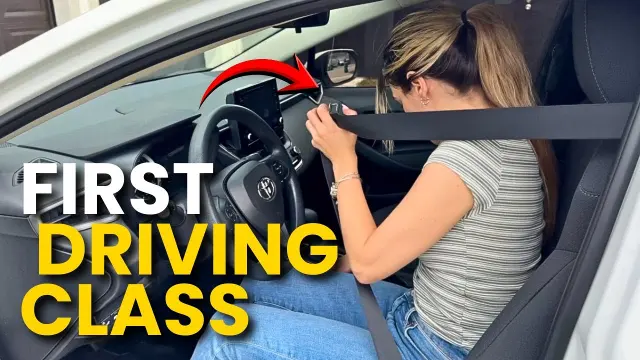
 Beginner Driving Lesson: Your First Practice Session Step by Step
#Traffic Driving
1 ideas
Beginner Driving Lesson: Your First Practice Session Step by Step
Get new #Traffic Driving ideas by email
Every Thursday: the week's best ideas, with the newest from #Traffic Driving.
Related tags
Traffic Driving: A Guide to Driving Safely Among Others
Traffic driving is the part of learning to drive that has less to do with the car and more to do with everyone else on the road. A quiet car park teaches you where the pedals are; traffic teaches you how to share space with people who are turning, hesitating, overtaking and stopping without warning. It is the skill of reading a situation as it develops and making your own intentions clear in return.
What it means in practice
Driving in traffic is mostly about three things: observation, positioning and communication. Observation means looking far enough ahead to see problems forming rather than reacting to them at the last moment. Positioning means being in the right lane, at the right speed, with enough room around you. Communication means using your indicators, your brake lights and your road position to tell other drivers what you intend to do — and doing it early enough that it is useful.
The kinds of traffic you will meet
Read more
Conditions vary enormously, and each asks something different of you.
- Dense slow-moving city traffic, where gaps are small and decisions must be quick but gentle.
- Fast multi-lane roads, where lane changes need planning rather than impulse.
- Rural roads with blind bends, where speed must leave room for what you cannot yet see.
- Junctions and roundabouts, where priority rules matter and hesitation causes confusion.
- Poor conditions — rain, fog, low sun, darkness — that reduce both your visibility and your grip.
What beginners should know
Start with short, quiet routes and build up gradually. Experience is cumulative, and confidence grows from repetition rather than from bravery. Ask an experienced driver to sit with you on unfamiliar roads before you attempt them alone.
Keep your following distance generous. A common teaching habit is to leave at least a two-second gap to the vehicle ahead in good conditions, and to double it when the road is wet or visibility is poor. That gap is not politeness; it is the space you need to stop.
Mirrors should be checked regularly, not only before manoeuvres, and a glance over the shoulder covers the blind spot that mirrors cannot. When you signal, signal early and cancel it afterwards — a forgotten indicator misleads the person behind you.
Practical habits worth building
Anticipate rather than react. Watch for brake lights several cars ahead, for pedestrians approaching crossings, and for side roads where someone may pull out. Assume other drivers may not have seen you, and drive so that their mistake does not become your emergency. Stay out of other vehicles' blind spots where you can.
Fatigue and frustration are real hazards. If you are tired, stop somewhere safe and rest. If another driver behaves badly, let it go rather than answering it with your own car; escalating a conflict is never worth it.
Finally, remember that smooth driving is safe driving. Gentle braking, steady speed and predictable positioning make you easy to read, and easy-to-read drivers are the ones other people can safely drive around.
#Traffic Driving: frequently asked questions
How do I start driving in traffic as a beginner?
Begin on short, quiet routes and repeat them until the basics feel automatic, then gradually move to busier roads as your confidence grows. Bringing an experienced driver along on unfamiliar routes is a sensible step before tackling them alone. Confidence comes from repetition rather than from pushing yourself into situations you are not ready for.
What should I focus on first when driving among other cars?
Concentrate on three habits: looking well ahead to spot problems forming, keeping your lane position and speed steady, and signalling your intentions early enough for others to react. These matter more than car control once you are out in traffic. Practise them on every trip, not just difficult ones.
Which kind of traffic should I practise first?
Start with calm roads where you can build observation and positioning skills without pressure, then move on to junctions and roundabouts, where priority rules and clear decisions matter most. Fast multi-lane roads and poor weather conditions are best left until the basics feel natural. Each type of road asks something different of you, so introduce them one at a time.
How do I deal with nerves or aggressive drivers in traffic?
Keep your following distance generous and drive smoothly, because predictable driving gives you more time to think and makes you easier for others to read. If someone behaves badly, let it go rather than responding with your own vehicle — escalating never helps. If you are tired or tense, pull over somewhere safe and take a break before continuing.
What are the most common mistakes new drivers make in traffic?
Forgetting to cancel an indicator, checking mirrors only before manoeuvres instead of regularly, and sitting in another vehicle's blind spot are all frequent slips. Reacting late to what is happening ahead, rather than anticipating it, is another common habit worth correcting early. Checking over your shoulder fills the gap that mirrors leave, and it is easy to overlook.
How can I tell whether I am driving well in traffic?
Smoothness is the clearest sign: gentle braking, steady speed and a predictable position tell everyone around you what you are doing next. If you find yourself braking sharply or making sudden lane changes, you are probably looking too close to the car in front. Reading the situation early is what turns a stressful drive into an ordinary one.
Videos come from YouTube and posts from Instagram; titles and summaries are our own. All rights belong to their creators.