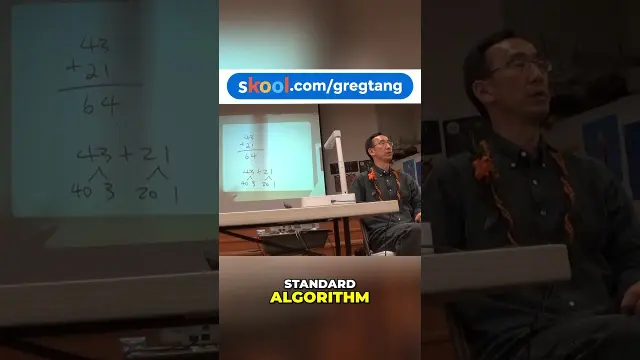
 Foundational Math: Clear Approaches to Addition and Subtraction
#Arithmetic
10 ideas
Foundational Math: Clear Approaches to Addition and Subtraction
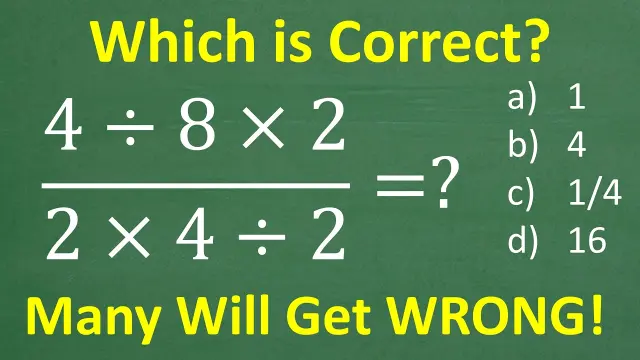 Common Mistakes When Solving Basic Math Order of Operations
 Simple Shortcut for Easier Multiplication
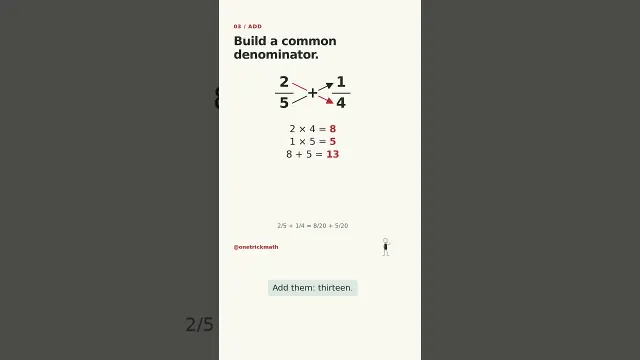 Understanding When to Cross-Multiply Fractions
 Young Students Demonstrate Mental Math Prodigy Skills
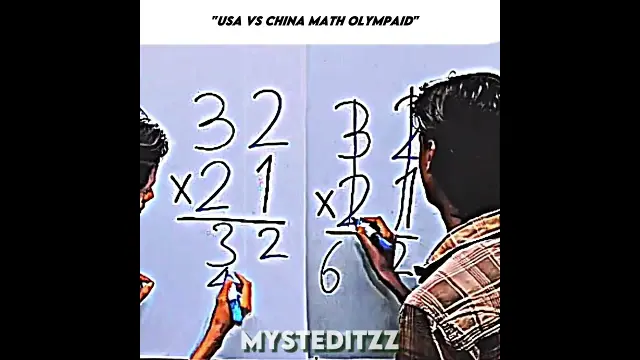 Comparing USA and China Math Methods for Multiplication
 How Young Carl Gauss Outsmarted His Math Teacher
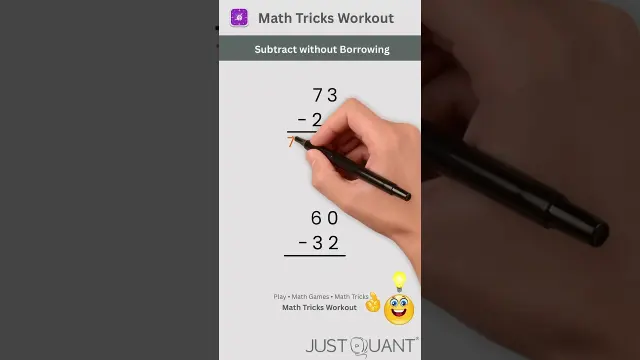 Mental Math Trick for Subtraction Without Borrowing
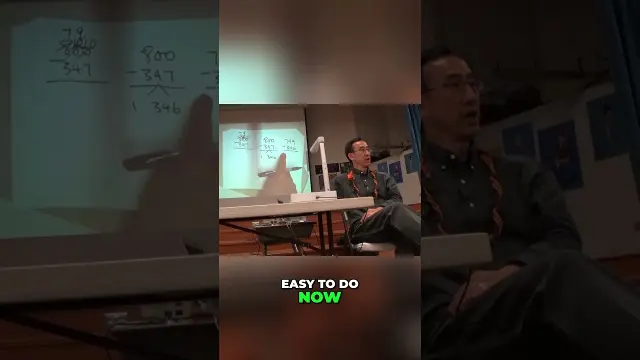 Simplified Subtraction Method to Avoid Borrowing Confusion
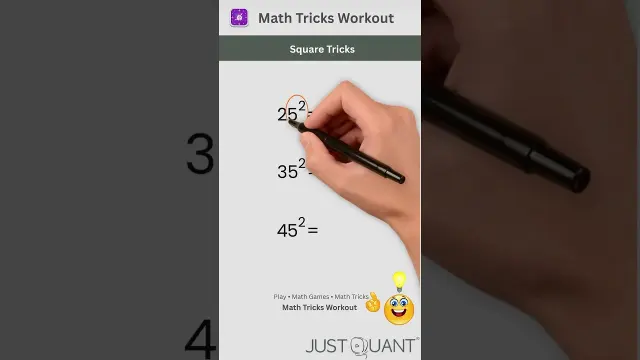 Vedic Math Squaring Shortcut for Numbers Ending in Five
Get new #Arithmetic ideas by email
Every Thursday: the week's best ideas, with the newest from #Arithmetic.
Related tags
Arithmetic Basics and Mental Math
Arithmetic is the branch of mathematics that deals with numbers and the basic operations you use with them. It is one of the oldest and most practical parts of math, because it helps you count, measure, compare, and solve everyday problems. From splitting a bill to checking a receipt or working out a recipe, arithmetic is part of daily life.
What arithmetic includes
The main operations in arithmetic are addition, subtraction, multiplication, and division. These are the building blocks for more advanced mathematics. Arithmetic also includes working with place value, fractions, decimals, percentages, and negative numbers. Once you understand how these parts fit together, many calculations become much easier.
Arithmetic comes from ancient traditions of counting and trade. Different cultures developed their own ways of recording numbers and making calculations, but the basic ideas are shared everywhere: combining, taking away, grouping, and sharing.
Read more
Common ways to work with numbers
There is usually more than one way to solve a calculation. Some people prefer written methods, while others like mental math or estimation.
- Addition combines quantities.
- Subtraction finds the difference between numbers.
- Multiplication is repeated addition or scaling up.
- Division splits a number into equal parts or groups.
For larger calculations, place value matters. A number is made up of ones, tens, hundreds, and so on, and understanding this structure makes written methods much clearer. When you know why a method works, you are less likely to make simple mistakes.
Helpful skills for beginners
If you are learning arithmetic, start with the basics and build steadily. Good number sense is more useful than rushing.
- Learn the times tables gradually and practice them often.
- Pay attention to place value, especially with larger numbers.
- Check subtraction by adding the answer back to the smaller number.
- Use estimation to see whether an answer is reasonable.
- Break difficult problems into smaller steps.
It also helps to read the question carefully. Many arithmetic mistakes happen not because the calculation is hard, but because the wrong operation was chosen. Underlining key numbers or rephrasing the problem in your own words can make a big difference.
Mental math and written methods
Mental math is useful when the numbers are simple, when you want a quick estimate, or when you are checking an answer. Written methods are better when the numbers are larger or when accuracy matters more than speed. You do not need to choose one style forever. Most confident learners use both.
A useful habit is to look for friendly numbers. For example, some calculations become easier if you round, split numbers apart, or use known facts. At the same time, it is important to know the standard methods so you understand the logic behind the shortcut.
Tips for building confidence
Arithmetic improves with regular practice. Short, frequent practice sessions are often more effective than long, tiring ones. If you make a mistake, try to understand where it happened instead of just correcting the final answer. That way, you learn the pattern behind the error.
You may also find it useful to explain a calculation out loud or write down each step. Clear thinking is just as important as quick thinking. Over time, arithmetic becomes less about memorizing rules and more about seeing number relationships clearly.
Videos come from YouTube and posts from Instagram; titles and summaries are our own. All rights belong to their creators.