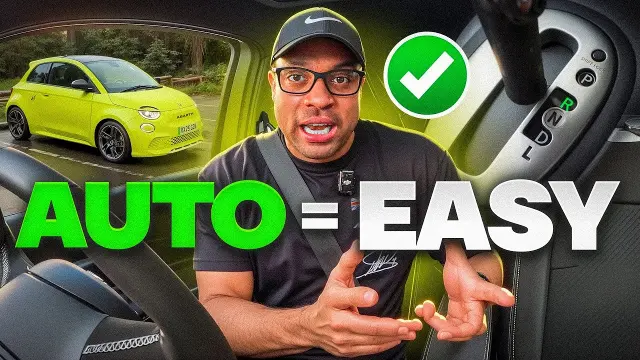
 Beginner Guide to Driving an Automatic Car Step by Step
#Automatic Car
2 ideas
Beginner Guide to Driving an Automatic Car Step by Step
 Reversing Goes Wrong in an Automatic Car Mock Test
Get new #Automatic Car ideas by email
Every Thursday: the week's best ideas, with the newest from #Automatic Car.
Related tags
Automatic Car: A Beginner's Guide to Driving with Ease
An automatic car is one that changes gear for you. Instead of working a clutch and moving a gear lever through a sequence of ratios, you simply choose a direction and let the car decide when to shift. It is the most common choice for everyday drivers in many parts of the world, and it is especially forgiving for anyone still building confidence at the wheel.
How it differs from a manual
The layout is the first thing you notice: two pedals instead of three. The pedal on the left is the brake, the one on the right is the accelerator, and there is no clutch. Because your left foot has nothing to do, it is usually safest to keep it resting on the floor and use only your right foot for both pedals. This removes the risk of pressing both at once.
Underneath, an automatic transmission chooses gears according to your speed and how firmly you press the accelerator. Several designs exist. Some use a fluid coupling that gives a very smooth, gentle feel; some use belts and pulleys for seamless, stepless acceleration; others use two clutches for quicker, sportier changes. You do not need to know the difference to drive well, but it explains why two automatic cars can feel quite unlike each other.
Read more
Understanding the selector
Most automatics use a familiar pattern of positions:
- P, park, locks the transmission. Use it when the car is stopped and you are leaving it.
- R, reverse. Come to a full stop before selecting it.
- N, neutral, disconnects drive. You will rarely need it in normal driving.
- D, drive, for going forward.
- L or a manual mode on some cars, which holds lower gears for steep hills or engine braking.
Press the brake before moving the selector, and keep your foot there until you are ready to set off.
What beginners should know
An automatic will creep forward gently when you release the brake in drive, even without touching the accelerator. In traffic jams this is useful, but in tight spaces it means you should cover the brake and let the car inch along rather than adding power.
When you want to overtake or climb a hill, pressing the accelerator further prompts a downshift and a surge of power; this is normal, not a fault. On steep descents, selecting a lower gear helps control your speed without overusing the brakes.
Practise in a quiet area first: pulling away, stopping smoothly, reversing into a space and parking on a slope. Learn where your own car's selector positions sit, so you never have to look down for them in traffic. Smoothness, not speed, is the mark of a good automatic driver.
#Automatic Car: frequently asked questions
How do I start and pull away in an automatic car?
With your foot on the brake, press the start button or turn the key, then move the selector from park into drive while keeping the brake pressed. Release the brake and the car will begin to creep forward on its own, so add gentle pressure to the accelerator only once you have room. Take a moment to feel how softly the car moves before pressing harder.
Should I use both feet to drive an automatic?
No — the usual and safer approach is to use your right foot for both the brake and the accelerator, leaving your left foot resting on the floor. With only two pedals sitting close together, using both feet raises the chance of pressing them at the same time. Keeping one foot in charge makes your reactions more predictable, especially in an emergency.
Which type of automatic car should I choose?
Different automatic designs feel noticeably different: some are silky and gentle, some accelerate without any steps at all, and some change more sharply and sportily. Rather than memorising the engineering, drive a couple of examples and notice which one suits the way you like to travel. A smooth, calm feel usually appeals to newer drivers, while a livelier response suits those who enjoy a bit more involvement.
How do I take care of an automatic car?
Treat it much like any other car — keep to the servicing schedule in your handbook, watch fluid levels, and keep tyres properly inflated. One automatic-specific habit matters: come to a complete stop before moving the selector between drive, reverse and park, and avoid holding the car on a hill with the accelerator alone. Gentle, deliberate use of the selector and pedals is what keeps the transmission healthy.
What mistakes do new automatic drivers make most often?
Two stand out: hovering a foot over both pedals at once, and letting the car creep too eagerly in tight spaces instead of covering the brake. Another is looking down at the selector in traffic because the positions have not yet become second nature. Practise pulling away, stopping smoothly, reversing into a space and parking on a slope in a quiet spot until the layout feels automatic.
Why does the car lurch forward when I press the accelerator harder?
That surge is the transmission dropping to a lower gear to give you more pulling power, which is exactly what you want for overtaking or climbing a hill — it is a normal response, not a fault. If you need to hold a steady, slower speed on a long descent, selecting a lower gear lets the engine help control the car instead of relying on the brakes. Ease off the pedal once you have the pace you want and the car will settle again.
Videos come from YouTube and posts from Instagram; titles and summaries are our own. All rights belong to their creators.