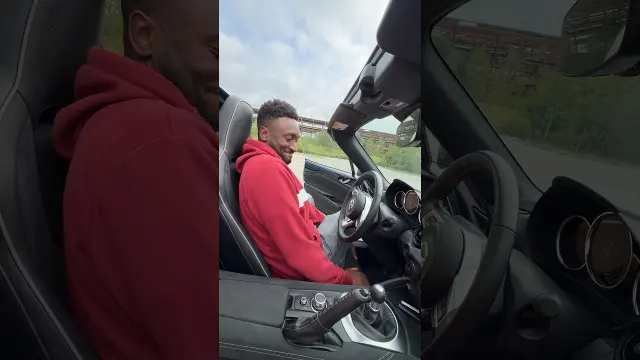
 Learning to Drive a Manual Car for the First Time
#Manual Transmission
2 ideas
Learning to Drive a Manual Car for the First Time
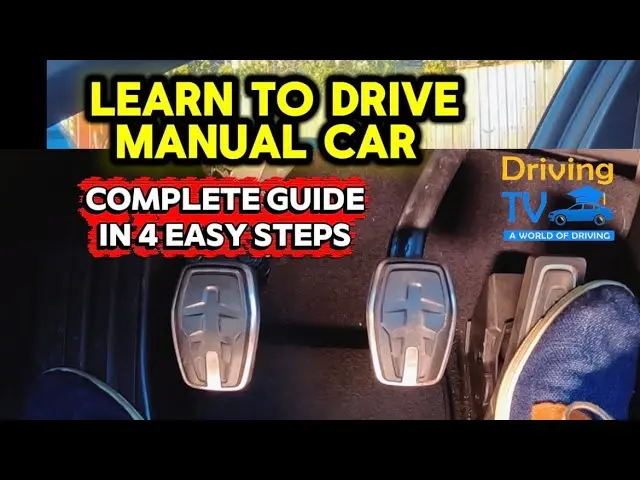 Learning to Drive a Manual Car: Four Steps Explained in 20 Minutes
Get new #Manual Transmission ideas by email
Every Thursday: the week's best ideas, with the newest from #Manual Transmission.
Related tags
Manual Transmission: A Beginner's Guide to Shifting Gears
A manual transmission is a gearbox you operate yourself. Instead of electronics choosing the ratio for you, a lever and a third pedal put the decision in your hands: you decide when to change gear, how early or late to shift, and how smoothly the car moves between them. It is one of the oldest and most direct ways of connecting an engine to the road, and it has stayed largely the same in principle since cars first needed more than one gear.
What is actually happening
An engine is happiest spinning within a certain range. The gearbox sits between engine and wheels and offers several ratios, so the same engine speed can produce slow, strong pulling in a low gear or relaxed cruising in a high one. In a manual car, a clutch — a pair of friction plates that can be pressed together or pulled apart — is the bridge between the two. Press the clutch pedal and the engine is disconnected from the gearbox, which is why you can change gear without grinding metal. Release it and the plates meet again, gradually enough not to jolt the car.
The layout and the feel
Read more
Most cars use a floor lever working through a pattern, usually an H-shape, with a gear for each corner plus reverse somewhere separate, often reached by lifting a collar or pushing down. The lever's path is deliberately notched so your hand learns the map without looking. Inside the gearbox, components called synchronisers match the speeds of the parts about to engage, which is why modern shifting is far gentler than the double-declutching described in old driving manuals. Some vehicles make the driver's involvement more explicit still: a sequential lever on a motorcycle or a paddle system that changes gear one step at a time. These feel different, but the idea is the same — the driver, not a computer, chooses.
Why people keep choosing it
Enthusiasts talk about engagement: hearing the engine, feeling the bite of the clutch, matching a downshift to a corner. Others value the simplicity — a manual gearbox has fewer parts to fail and is cheap to maintain. Learning it also teaches you something about how a car behaves, because nothing hides the connection between your feet and the wheels. On hills and in heavy traffic the third pedal can be tiring, and that is a fair reason to prefer an automatic.
Getting started
Find the bite point first, on flat, quiet ground: the moment in the pedal's travel where the car begins to creep. Practice pulling away and stopping without touching the accelerator much. Stalling is normal and harmless — restart and try again. Learn to hold the car on a slope with the handbrake rather than the clutch, to save wear. And keep your heel on the floor, using your ankle, so the clutch moves smoothly rather than in jerks.
#Manual Transmission: frequently asked questions
How do I start learning to drive a manual car?
Begin on flat, quiet ground and spend your first sessions doing nothing but finding the bite point — the spot in the pedal's travel where the car starts to creep forward. Practice pulling away and stopping with very little accelerator, and treat stalling as a normal part of the learning curve rather than a mistake. Once pulling away feels calm and repeatable, add gear changes and then hill starts.
What do I actually need before my first manual lesson?
You need a car with a working clutch and handbrake, a flat and empty space to practice in, and enough patience to repeat the same simple movement many times. A calm instructor helps more than anything else, because the skill is mostly about feel and timing rather than theory. Knowing the gear pattern before you set off means your hand can learn the map without your eyes leaving the road.
Which kind of manual gearbox should I learn on?
A conventional floor lever with a notched pattern is the best starting point, because it teaches you the relationship between clutch, engine sound and road speed. Sequential levers and paddle shifters ask for the same judgement but remove the gear pattern, so they are easier to pick up once the basics are there. Whatever the layout, the principle is identical: you decide when the ratio changes.
How do I look after a manual transmission?
Keep the clutch pedal fully released when you are not changing gear, and resist the habit of resting your foot on it, since that keeps the plates slipping. Hold the car on a slope with the handbrake instead of the clutch, and use smooth ankle movement rather than sudden jerks. Routine servicing according to the manufacturer's schedule keeps the gearbox and clutch healthy without much effort.
What are the most common beginner mistakes with a manual car?
Releasing the clutch too quickly is the usual reason for stalling, and it is fixed by slowing the release around the bite point. Relying on the clutch to hold the car on a hill, or hovering over the pedal while cruising, wears it out far faster than clumsy shifts do. Looking down at the lever instead of listening to the engine is another common habit worth breaking early.
Is a manual worth choosing over an automatic?
A manual gives you direct control over gear choice and a stronger sense of what the car is doing, which is why many drivers find it more engaging. It is also a simpler mechanism with fewer parts that can fail. In heavy traffic and on hills, though, the extra pedal work becomes tiring, and preferring an automatic for that reason is entirely reasonable.
Videos come from YouTube and posts from Instagram; titles and summaries are our own. All rights belong to their creators.