 First Time Driving: What to Do Before You Move the Car
#Car Controls
2 ideas
First Time Driving: What to Do Before You Move the Car
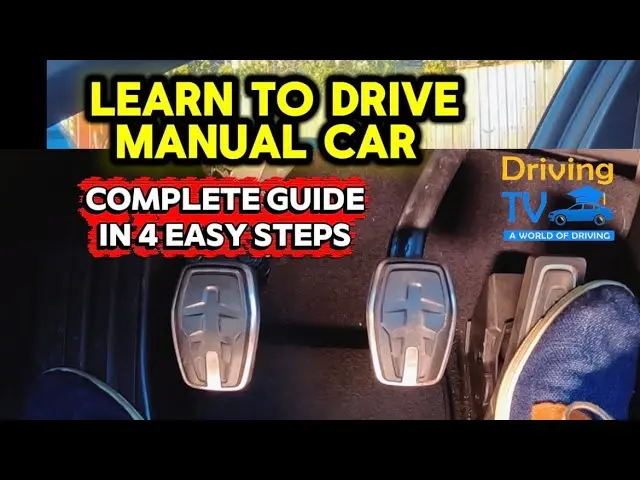 Learning to Drive a Manual Car: Four Steps Explained in 20 Minutes
Get new #Car Controls ideas by email
Every Thursday: the week's best ideas, with the newest from #Car Controls.
Related tags
Car Controls: A Beginner's Guide to Every Pedal and Lever
Every car looks complicated from the driver's seat the first time. In practice the controls are few, and each one does a single, predictable job. Learning what they are and how they feel before you move off is what turns a nervous first lesson into a calm one. Nothing here replaces proper instruction from a qualified teacher, but knowing the layout in advance means you spend your first hour driving rather than searching.
The pedals
In a manual car there are three, arranged left to right: clutch, brake, accelerator. In an automatic there are two, brake and accelerator.
- The clutch connects and disconnects the engine from the wheels. You press it to change gear and to pull away; you release it gradually so the car moves smoothly rather than lurching.
- The brake slows and stops the car. It is the pedal you should be able to find without looking.
- The accelerator adds power. It responds to gentle, steady pressure, not to stamping.
Read more
Use your right foot for the brake and accelerator, and your left for the clutch alone. Resting a foot on the clutch or the brake while driving wears components and confuses the car's behaviour.
The steering wheel and its stalks
The wheel steers, but it also carries controls you will use constantly. Indicators almost always sit on a stalk behind the wheel, usually on the left, with wipers on the right — the sides can differ between cars, so check before you set off. Hold the wheel around a quarter to three, or ten to two, with both hands and your thumbs resting on the rim rather than hooked inside it.
Gears and the parking brake
A manual gear lever follows a fixed pattern, often an H shape with a gate for reverse. Neutral is the position where no gear is engaged. An automatic selector usually offers park, reverse, neutral and drive. The parking brake — a lever, a pedal or an electronic switch, depending on the car — holds the vehicle still when parked and is useful for hill starts.
Set these before you move
Adjust the seat so you can press the clutch fully with a slight bend in the knee, then the mirrors, then the head restraint. Know where the lights, hazard lights, horn and demisters are. Doing this in the same order every time builds a habit.
Practical tips
Sit still with the engine off and press each pedal a few times to learn where it bites and how far it travels. Practise finding the brake with your eyes on the road, not on your feet. Make your inputs slow and early rather than fast and late — smoothness is the skill that everything else rests on. And if a control surprises you, stop somewhere safe and work it out calmly.
#Car Controls: frequently asked questions
How do I get familiar with car controls before my first lesson?
Sit in the driver's seat with the engine off and press each pedal a few times so you learn how far it travels and where it starts to respond. Then adjust the seat, mirrors and head restraint, and locate the lights, hazards, horn and demisters. Doing this in the same order every time turns it into a habit rather than a scramble.
What do I actually need to know before I start driving?
You need to know which pedal does what, where the indicators and wipers live on the stalks, and how the gear lever or selector moves through its pattern. You should also be able to find the brake without looking down at your feet. Everything else is feel, and feel comes with practice rather than reading.
How are the pedals arranged, and which foot do I use?
In a manual car the pedals run left to right as clutch, brake and accelerator; an automatic simply has brake and accelerator. Your right foot works the brake and accelerator, while the left is reserved for the clutch alone. Resting a foot on either the clutch or the brake while driving wears parts and makes the car behave unpredictably.
How do I choose between learning in a manual and an automatic?
A manual gives you more to coordinate, since you are managing the clutch alongside the pedals and gears, but it leaves you licensed for both kinds of car in many places. An automatic removes the clutch entirely, so you can concentrate on steering, observation and smooth braking. Which suits you depends on how much you want to juggle at once and what you plan to drive afterwards.
How do I care for the controls so they keep working properly?
Treat the pedals as pressure-sensitive rather than something to stamp on, and keep your feet off them when you are not using them. Hold the wheel at roughly quarter to three or ten to two with your thumbs resting on the rim rather than hooked inside, since gripping the spokes or the inside of the rim is how wheels and hands get hurt. Use the parking brake whenever you leave the car or start on a hill.
What mistakes do new drivers make with car controls?
The most common ones are hunting for the brake by looking down, releasing the clutch too quickly so the car lurches, and making inputs late and hard instead of early and gentle. Another is assuming the indicator and wiper stalks are always on the same side, when they can be swapped between cars. Check the layout of an unfamiliar car before you set off, and if a control surprises you, pull over somewhere safe and work it out calmly.
Videos come from YouTube and posts from Instagram; titles and summaries are our own. All rights belong to their creators.