 Deterministic Finite Automata Made Practical for Coders
#Programming
13 ideas
Deterministic Finite Automata Made Practical for Coders
 Debugging the Pythagorean Comma on Piano Keyboards
 What Is an Algorithm Explained Through Real World Examples
 Introduction to Computer Science and Python Programming
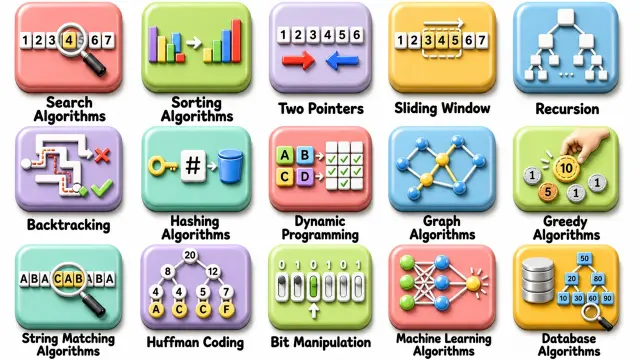 A Complete Guide to Essential Programming Algorithms Explained Simply
 Harvard Full Computer Science University Course and Lectures
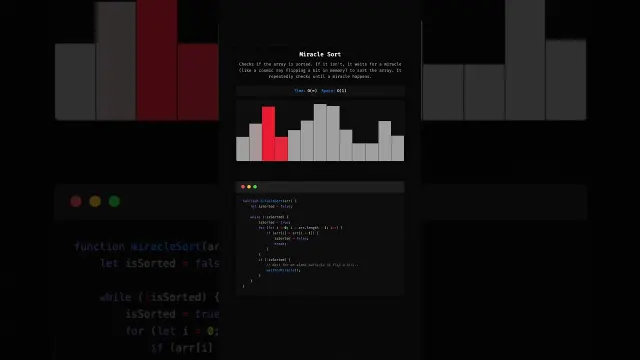 Understanding Miracle Sort as a Meme Programming Algorithm
 Visual Crash Course on Core Data Structures and Algorithms
 Beginner Python Programming Explained Visually With Notebooks
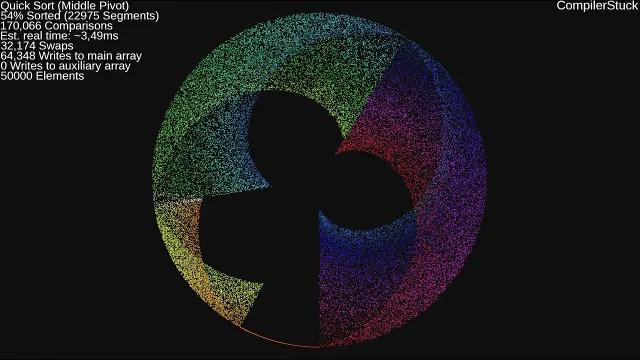 Visualizing Twenty Different Sorting Algorithms with Polar Coordinates
 Harvard Computer Science Lecture on Search and Sorting Algorithms
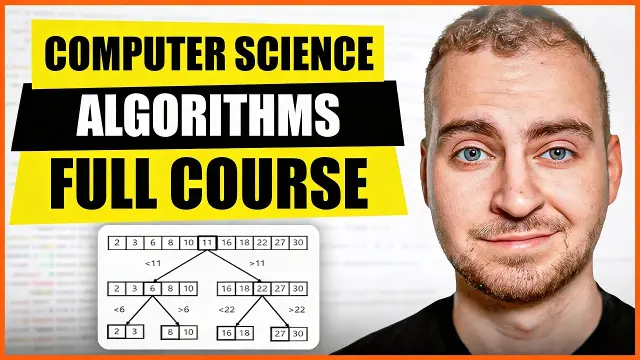 Famous Computer Science Algorithms Full Course
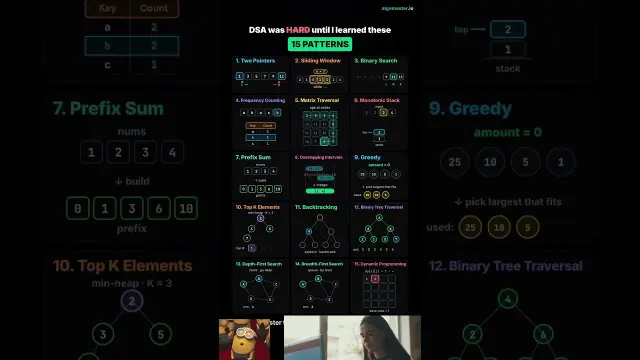 Fifteen Essential Problem Solving Patterns for Data Structures and Algorithms
Get new #Programming ideas by email
Every Thursday: the week's best ideas, with the newest from #Programming.
Related tags
Programming Basics and Coding Guide
Programming is the process of giving instructions to a computer so it can carry out tasks in a precise, repeatable way. At its heart, programming is about solving problems: you break a larger task into smaller steps, express those steps clearly, and test whether the result works as intended. It is used in websites, apps, games, tools, automation, data processing, and many other digital systems.
Programming has grown out of mathematics, logic, and early computer science, but it is also a practical craft. A program is written in a programming language, which provides rules for telling a computer what to do. Different languages suit different purposes, but the basic idea stays the same: input goes in, instructions are followed, and output comes out.
What programming involves
Most programming work includes a few core ideas:
Read more
- Variables store information that can change.
- Conditions let a program choose between options.
- Loops repeat actions.
- Functions group steps into reusable units.
- Data structures help organize information.
- Algorithms describe the steps for solving a problem.
These ideas appear in nearly every language, even when the syntax looks different. If you understand the concepts, learning a new language becomes much easier.
Main kinds of programming
There are many ways to approach programming. You may hear about:
- Web programming, which builds websites and online applications.
- App programming, which creates software for phones, tablets, or desktops.
- Game programming, which focuses on interactive entertainment.
- Systems programming, which works close to the operating system and hardware.
- Data and scientific programming, which processes information and supports analysis.
- Scripting, which automates tasks and glues different tools together.
Some languages are very general-purpose, while others are better suited to specific jobs. As a beginner, it helps to choose one language and stay with it long enough to build confidence.
What beginners should know
You do not need to be good at advanced mathematics to start programming. What helps most is patience, curiosity, and a willingness to make mistakes and fix them. Debugging, or finding and correcting errors, is a normal part of the process. In fact, learning to read error messages and trace problems is one of the most valuable skills you can develop.
A few practical habits make learning easier:
- Start with small programs instead of big projects.
- Write code regularly, even for short sessions.
- Read other people’s code to see different styles.
- Test often so you can catch problems early.
- Keep your code clear and simple before trying to make it clever.
Style and good practice
Good programming is not only about making something work. It is also about writing code that other people, including your future self, can understand. Clear names, sensible structure, and consistent formatting make a big difference. Comments can help, but they should explain why something is done, not repeat what the code already says.
As you improve, you will learn to think more carefully about design: how to organize a program, how to reuse code, and how to make it easier to maintain. That mindset matters in every area of programming.
A gentle way to begin
If you are new, try to focus on one small goal at a time. Make a program that prints text, stores a number, asks for input, or makes a simple decision. These tiny steps may seem basic, but they build the foundation for everything else. Programming becomes much less mysterious once you see that complex software is made from many simple parts working together.
Videos come from YouTube and posts from Instagram; titles and summaries are our own. All rights belong to their creators.