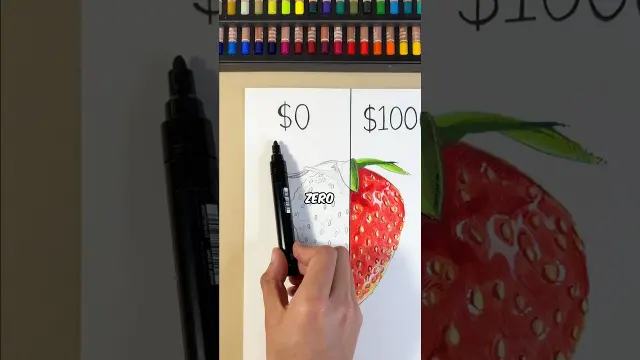
 Drawing a strawberry with no budget versus costly supplies
#Art Supplies
3 ideas
Drawing a strawberry with no budget versus costly supplies
 How to Actually Start Drawing as a Beginner
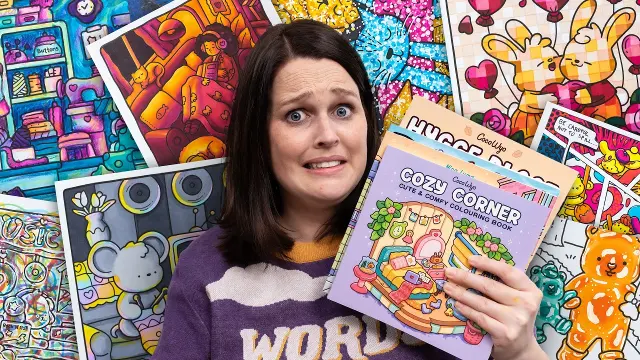 Trying Out Popular Adult Coloring Book Trends
Get new #Art Supplies ideas by email
Every Thursday: the week's best ideas, with the newest from #Art Supplies.
Related tags
Art Supplies: A Beginner's Guide to Choosing and Using Them
Art supplies are the tools artists use to make marks, mix colour and give shape to an idea. The category is broad: drawing materials such as graphite pencils, charcoal, pastels and pens; painting media such as watercolour, gouache, acrylic and oil; surfaces like paper, canvas and board; and the supporting equipment that holds everything together, from brushes and palettes to erasers, sharpeners and easels.
Where the materials come from
Most traditional supplies have long histories. Pigments were originally ground from earth, minerals and plants, and many modern paints still carry names that recall those sources, such as ochre, umber and ultramarine. Paper began as a handmade fibre sheet and is now produced in an enormous range of weights and textures. The basic categories have stayed remarkably stable for centuries, which is why a beginner today can follow advice written decades ago and still find it useful.
The main families of materials
Read more
Drawing media are usually dry or water-based and are the cheapest way to start. Graphite comes in graded hardness, from soft pencils that smudge darkly to hard ones that hold a fine line. Charcoal and pastels are softer and dustier, well suited to expressive shading. Ink and fineliners give crisp, permanent lines.
Painting media differ mainly in their binder. Watercolour is transparent and rewets with water; gouache is opaque and matte; acrylic dries into a flexible plastic film and can be used on many surfaces; oil is slow-drying and rich but needs more equipment and ventilation.
Colour pencils, markers, crayons and mixed-media supplies sit between these families and are popular because they are portable and forgiving.
What beginners should know
Buy less than you think you need. A small set of good materials will teach you more than a large set of poor ones, and it is easy to add colours later. Start with one medium and learn how it behaves before branching out.
Paper matters as much as paint or pencil. Thin paper buckles under water, and very smooth paper rejects soft charcoal. Match the surface to the medium: heavier watercolour paper for wet media, textured drawing paper for dry ones.
Choose student-grade materials while learning. They are cheaper and perfectly adequate for practice, and the differences from professional grades become meaningful only once you have some experience.
Practical tips
- Keep a small sketchbook for testing new materials before using them in a finished piece.
- Store brushes flat or bristle-up, never resting on the bristles, and wash them promptly after use.
- Keep a soft eraser and a kneaded eraser on hand; they remove graphite without damaging the paper.
- Protect work from sunlight and damp, especially pieces made with pastel or watercolour.
- Work in a ventilated space when using solvents, sprays or fixatives, and follow the product instructions.
The best supplies are the ones you actually use. A modest kit kept within reach will carry you further than an expensive collection stored in a drawer.
#Art Supplies: frequently asked questions
How do I start using art supplies if I'm a complete beginner?
Start with one medium and a small set of basic tools so you can learn how the materials behave without feeling overwhelmed. A sketchbook, a few pencils or pens, and the right paper are enough to begin practicing and testing ideas.
What basic art supplies do I actually need to draw or paint?
The essentials are a drawing or painting medium, a suitable surface, and a few supporting tools like an eraser, sharpener, brushes, or a palette. The most important choice is matching the paper or canvas to the medium, since the wrong surface can make even good materials perform poorly.
Should I choose student-grade or professional art supplies?
Student-grade supplies are a smart choice when you are learning because they are affordable and still work well for practice. Professional-grade materials usually become more important once you understand your style and want more control, stronger color, or finer handling.
How do I choose between graphite, charcoal, pastels, ink, or paint?
Think about the look you want and how much control you need. Graphite and ink are great for clean lines and simple sketching, while charcoal and pastels are better for soft shading and expressive marks; paints are best when you want to build color and layer surfaces.
How should I care for my art supplies so they last longer?
Clean brushes soon after use and store them so the bristles keep their shape. Keep paper, finished artwork, and soft media like pastels away from moisture and strong sunlight, and always let tools dry fully before putting them away.
What are common mistakes people make when buying or using art supplies?
A common mistake is buying too many materials before learning the basics, which can make it harder to focus and practice well. Another is using the wrong paper or surface for the medium, such as thin paper with wet paint, which can cause buckling and poor results.
Videos come from YouTube and posts from Instagram; titles and summaries are our own. All rights belong to their creators.