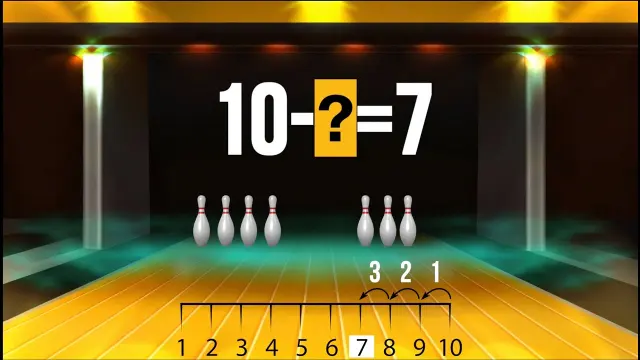
 Bowling Math Adventure Missing Number Subtraction for Kids
#Math Games
4 ideas
Bowling Math Adventure Missing Number Subtraction for Kids
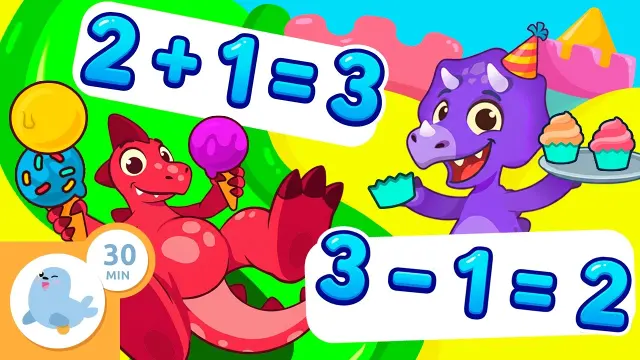 Dinosaur-Themed Songs and Games for Kids Learning Math
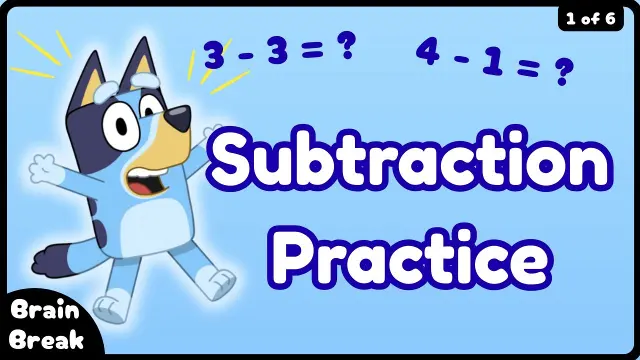 High Energy Subtraction Brain Break Movement Game for Kids
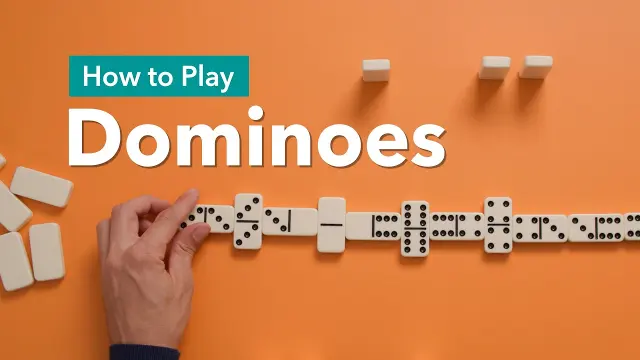 Domino Math Game Ideas for Preschool and Kindergarten
Get new #Math Games ideas by email
Every Thursday: the week's best ideas, with the newest from #Math Games.
Related tags
Math Games for Learning and Play
What math games are
Math games are playful activities that help you practice counting, number recognition, addition, subtraction, shapes, patterns, measurement, and logical thinking. They can be simple games with dice and cards, board games, puzzle activities, or quick challenges you play with paper, toys, or everyday objects. The idea is the same in every form: learning happens through movement, repetition, and problem-solving rather than through memorizing alone.
Math games have long been used in homes and classrooms because they make abstract ideas feel more concrete. When you move pieces, match cards, roll dice, or sort objects, numbers become something you can see and handle. That makes math feel less intimidating, especially for beginners and children who learn best through action.
Common kinds of math games
Read more
There are many ways to play with math, and you can choose the kind that fits the age and skill level.
- Counting games help with number sense, one-to-one matching, and simple addition.
- Dice games are useful for practicing quick recognition of numbers, comparing amounts, and adding totals.
- Card games often build memory, matching, and early arithmetic.
- Board games can support counting spaces, turn-taking, and simple strategy.
- Puzzle games encourage shape recognition, sequencing, and spatial reasoning.
- Sorting and pattern games help with classifying objects by size, color, shape, or quantity.
- Measurement games introduce length, weight, capacity, and comparison using familiar objects.
Why they work
Math games are useful because they repeat skills in a natural way. A child may count, compare, or solve the same kind of problem many times without it feeling like drill. Games also give immediate feedback. If a move is right, the player can see the result right away; if not, the next round offers another chance to try.
They also support more than math alone. Many games build attention, patience, memory, language, and fine motor skills. When you play together, you can talk about numbers and strategies in a relaxed way, which often helps understanding grow more smoothly.
Tips for beginners
If you are introducing math games, start with simple rules and a small number of choices. It is better to have one clear goal than too many steps. For younger children, use large pieces, visible numbers, and short rounds. For older children, add strategy, timing, or more complex sums.
A few practical tips can help:
- Begin with familiar materials such as blocks, buttons, coins, or playing cards.
- Keep the game short enough that attention stays fresh.
- Choose one skill at a time, such as counting, matching, or adding.
- Use language that is clear and consistent.
- Let mistakes be part of the game, not something to fear.
Making your own math games
You do not always need special materials. Many good math games can be made from paper, markers, dice, or household objects. A simple matching game, a counting path, or a sorting challenge can be enough. The most important thing is that the game is clear, playful, and suited to the learner.
With the right level of challenge, math games can make numbers feel friendly and understandable. They offer a calm way to build confidence, one turn at a time.
Videos come from YouTube and posts from Instagram; titles and summaries are our own. All rights belong to their creators.