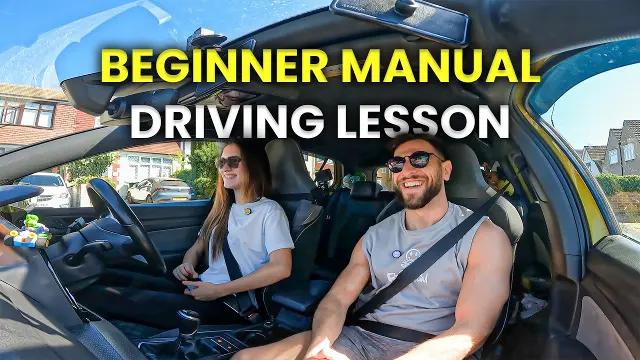
 A Beginner's First Manual Driving Lesson: Mirrors and Clutch
#Manual Driving
3 ideas
A Beginner's First Manual Driving Lesson: Mirrors and Clutch
 Everyday Driving Habits That Quietly Damage Your Car
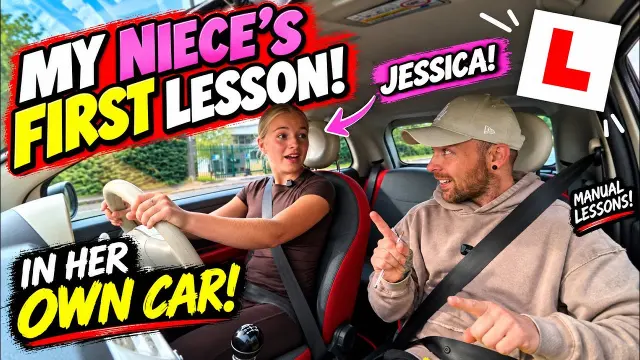 Teaching a First Manual Lesson in a Pupil's Own Car
Get new #Manual Driving ideas by email
Every Thursday: the week's best ideas, with the newest from #Manual Driving.
Related tags
Manual Driving: A Beginner's Guide to Clutch and Gears
Manual driving means changing gear yourself, with a gear lever and a clutch pedal, instead of letting the car choose for you. The arrangement is simple in principle: an engine spins happily only within a certain range of speeds, while the wheels turn at whatever speed the road demands. The gearbox sits between the two, trading turning force for speed. A low gear multiplies the engine's effort so the car can pull away or climb; a high gear lets it cruise quietly. Your job as the driver is to pick the gear that suits the moment and to join the engine and wheels smoothly each time.
The pedals and what they do
In a right-hand-drive car the clutch is on the left, worked with your left foot; the brake and accelerator are in the middle and on the right, worked with your right. The clutch is the link between engine and gearbox. Pressed down, it separates them, so the engine can spin while the car stays still and gears can be selected. Released, it rejoins them. Everything else in manual driving flows from doing that joining gently.
The bite point
Read more
As you let the clutch up, there comes a point where it begins to take up the drive and the car stirs — often called the bite point or friction point. Every car's is slightly different, and finding it is the first skill worth learning. On a quiet, level stretch of ground, hold the car on the handbrake, select first, add a little accelerator and raise the clutch slowly until you feel the engine note dip and the car lean forwards. Press back down. Repeat until your foot knows the spot without thinking.
Moving off and changing gear
To pull away: clutch down, first gear, a little accelerator, clutch up to the bite point, hold briefly, then release the rest as the car gathers pace. Once moving, keep your left foot away from the pedal entirely. To change up or down, ease off the accelerator, press the clutch, move the lever, and bring the clutch up smoothly — more slowly when changing down, since the engine and gearbox must meet at different speeds. Listening to the engine tells you more than watching the dial.
Hills, reversing and stopping
A hill start is the same sequence with the handbrake taking the strain until the clutch bites. Reversing is usually done on clutch control alone, at walking pace, with glances over both shoulders. When stopping, brake first and press the clutch only as the car slows towards a halt; stopping the engine by stalling is not a braking method.
Habits worth forming early
Resting a foot on the clutch wears it, and holding the car on the clutch at a junction does the same — use the handbrake instead. Coasting in neutral gives you less control. Stalling is normal and harmless; restart and try again. A few lessons from a qualified instructor shorten the learning curve considerably, and local licensing rules are worth checking before you practise on your own.
#Manual Driving: frequently asked questions
How do I start learning to drive a manual car for the first time?
Begin in a quiet, level place where you can focus on the pedals and the bite point without pressure. Practice pressing the clutch, selecting first gear, and easing the clutch up until you can make the car move smoothly, then stop and repeat until the feel becomes familiar.
What do I need to know before driving a manual transmission?
You need to understand the clutch, brake, accelerator, and gear lever, and how they work together. The key skill is coordinating the clutch and accelerator so the engine and wheels connect smoothly without stalling or jerking.
How do I choose the right gear while driving manual?
Use lower gears when you need more pulling power, such as pulling away, climbing, or driving slowly, and higher gears when the car is already moving comfortably. The best choice depends on road speed, engine sound, and how much force the car needs at that moment.
What is the proper way to care for a manual car while driving?
Avoid resting your foot on the clutch, and do not hold the car on the clutch at lights or junctions. Use the handbrake when waiting, keep your gear changes smooth, and avoid coasting in neutral when you want full control.
What are the most common mistakes beginners make with manual driving?
A common mistake is releasing the clutch too quickly, which can stall the car or make it lurch. Another is pressing the clutch unnecessarily or too early when stopping, instead of braking first and using the clutch only as the car slows to a halt.
Videos come from YouTube and posts from Instagram; titles and summaries are our own. All rights belong to their creators.